U.S. business data: a practical buyer’s guide
Start with a useful audience definition, then compare fields, coverage, and evidence.
Define the decision before the dataset
A U.S. business database is useful when it supports a specific decision: which accounts belong in a territory, which companies fit an offer, or which existing records need additional context. Start by writing that decision in one sentence. “Find independent HVAC businesses in Texas for account research” is a workable brief. “Send every business in America” leaves too many questions unanswered.
Separate companies, locations, and people
Ask what one row represents. A company can operate several locations and have several professional contacts. A file with 5,000 rows is not necessarily 5,000 distinct companies. Request separate identifiers for companies, locations, and people when those relationships matter. Also clarify whether company size describes the whole organization or a single location.
Compare usable records, not headline volume
Create a short list of required fields and optional fields. For each candidate file, review the proportion of rows that meet all required criteria together. An email field populated on most rows does not mean those same rows also contain your target location and job role. Ask for a sample selected across the requested segments and a field-coverage summary.
Turn the review into an acceptance brief
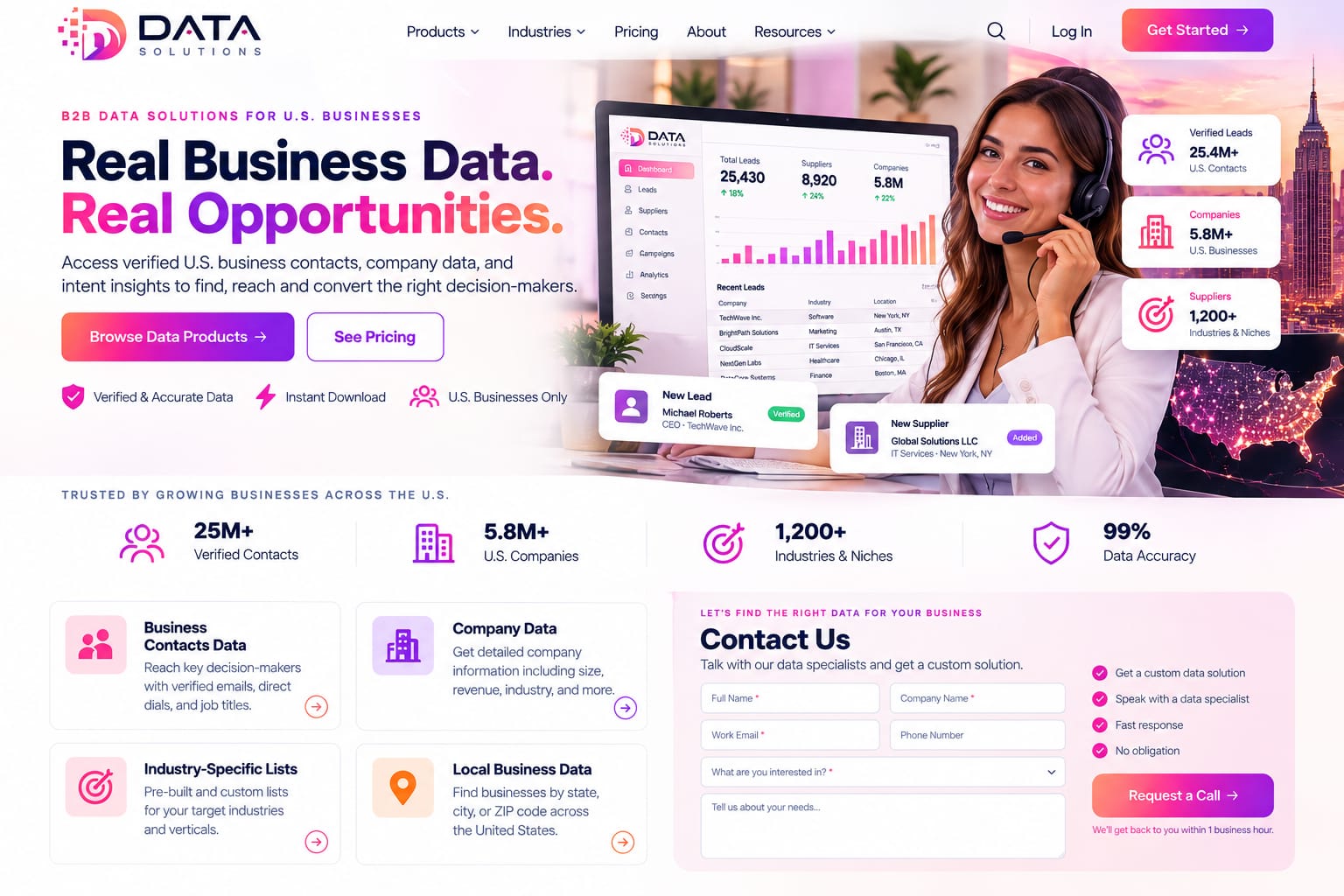
Agree on geography, exclusions, required fields, duplicate rules, date definitions, and output format before selecting a dataset. Keep a written record of which details were confirmed and which remain unknown. DATA Solutions focuses on U.S. business data and reviews availability for each request; a sample is a way to assess fit, not a promise of identical results for every record.
Define your U.S. audience
Tell us the states, industries, and fields you need. Our team reviews availability before responding.
Explore the relevant service